
Soy vs. Coconut Wax in Container Candles
- Laura Warburton
- Jan 15
- 3 min read

There are so many variables when it comes to candle making. Way more than I ever expected when I was first learning the ins and outs. These elements will affect the burn of the candle and how long it takes to completely burn down. And this list is not exhaustive.
Type of candle (container, pillar, other shape, sand)
Type of wax (paraffin, soy, coconut, a blend)
Vessel (endless…)
Size (how many ounces of actual candle you get minus the vessel)
Fragrance or fragrance blend (really endless…)
Color (natural, colored, and which color)
Wick (ECO, HTP, CDN, CD, Premier, zinc, wooden, etc.)
Wick material (cotton, pre-waxed cotton, etc.)
Size of wick (i.e. 8-24)
Temperature of wax when fragrance is added
Stir time and speed (seriously)
Temperature of wax when poured into the vessel (and the speed at which you do this)
How long your candle “cures” before it is lit
When I finally took the plunge and began buying materials, I knew I wanted to try soy wax. It was a decent price for starting out and the wax came in quick-melting flakes instead of slabs I would have to cut chunks off. I started with a small, 10-pound bag of Golden Brands 464 Enhanced Soy Container Wax from Lone Star Candle Supply. I also purchased vessels, fragrance oils, wicks, wick bars, and other equipment from them and was able to pick everything up in Keller to avoid shipping costs. I was also really nervous about shipping my glass candle jars, so it was a good plan.
Fast forward, and this is what I have learned about working with soy wax. Mind you, I have only used the GB 464 as mentioned, so this is the experience I will speak from.
The wax flakes melt SO quickly compared to a slab of coconut wax. This was especially nice

when I was starting out and using the double-boiler method in my kitchen. The less time for me to be at the stove (in any capacity), the better. The glass adhesion wasn’t great when the candles hardened and the solid wax had shrunk in the process and pulled away from the glass. Not a huge deal, but something worth noting. What was a huge pain was SINK HOLES. Initially, I wasn’t going to purchase a heat gun. After seeing what the candles looked like hardened though? I realized I would definitely need one. I honestly forgot how annoying it was until writing this just now. It was truly the most time consuming and frustrating part of the craft that I have experienced so far.
Another cosmetic element is the lumpy bumpy appearance of the wax once the candle has burned and cooled again. It doesn’t affect the function of the candle, but it’s not real pretty to look at. Unless you add a UV stabilizer, the 464 soy wax will discolor to a yellow color if using a clear vessel. As far as I know this is also cosmetic. Aaand that’s all I can think of for now. I might go back and burn test two candles of the same fragrance and I can come back later and share the results here.

And now to the coconut wax I now use! And I really wish I had just started with this kind, but Lone Star didn’t (and doesn’t) carry it without it being a blend of wax. What I get now is called Coco 83 and it is the most beautiful coconut wax. When I lived in Round Rock I purchased from Porter Candle Supply in Austin, but now I use Hive & Honey and get it shipped to me in two slabs totaling 44 pounds. While this does mean that I have to chop the slabs up myself, it is actually kind of satisfying to do and I really enjoy it for some reason. The slabs are also easier to store than a bag of wax flakes (I try not to keep anything in the box so I don’t “lose” it) and the slab still melts just fine. As long as I remember to turn my wax melter on early, I don’t have to wait for it to get up to temperature.
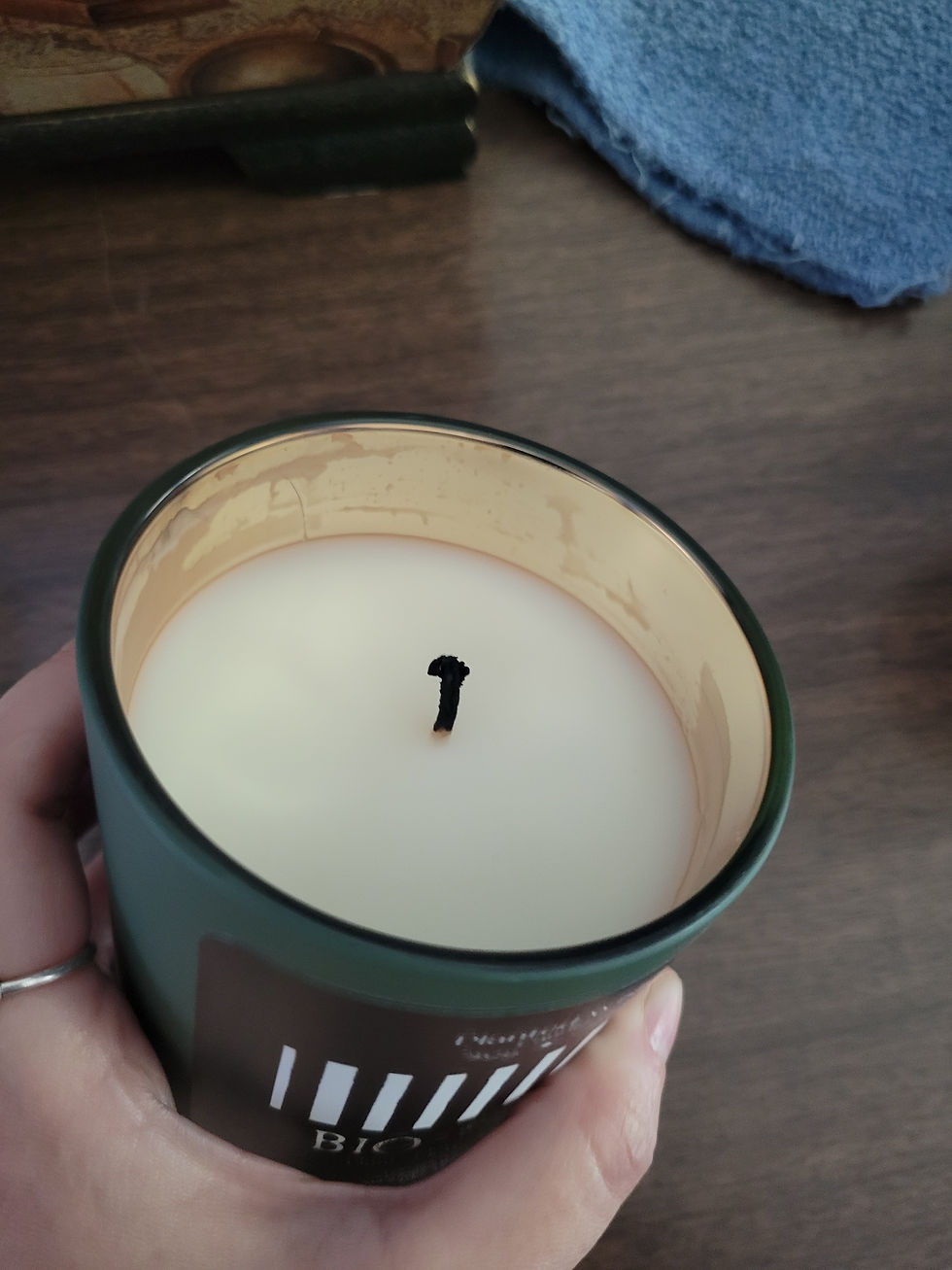
The poured coconut wax candles are chefs kiss. They are a beautiful, creamy off-white with
NO SINKHOLES. None. Not ever. I do pour my candles at a specific temperature and verrrry slowly, so that could also contribute. There are no wet spots (from the candle pulling away from the glass) and I never have to pull out my heat gun for these guys. PLUS, the wax is formulated with its own UV stabilizer so you don’t have to worry about your candles getting discolored over time. The smooth tops after burning are just the cherry on top!

Comments